Showing posts with label Database Sharding. Show all posts

Thursday, May 28, 2020

Interview @ 1mg : Round -1


Hi Friends, In this post, I'm sharing Java interview questions asked in 1mg in round - 1.

You can also go through my other java interview posts:


Interview Questions @ 1mg:

Question 1:

What is System.out, System.in and System.err?


Answer:

out, in and err all are fields in System class.

out: The standard output stream.This stream is already open and ready to accept output data. Typically this stream corresponds to display output or another output destination specified by the host environment or user.
Basically, it gives PrintStream. And all print() methods belong to class PrintStream.

public static final PrintStream out

in: The standard input Stream. This stream is already open and ready to supply input data. typically this stream corresponds to keyboard input or other input source specified by the host environment or user.

public static final InputStream in

err: The standard error output stream. This stream is already open and ready to accept output data.
By convention, this output stream is used to display error messages.

public static final PrintStream err 


Question 2:

What is the difference between Class.forName() and Class.forName().newInstance() methods?

Answer:

Lets take an example to understand the difference better:

public class Demo{

    public Demo(){

        
    }

    public static void main(String[] args){

        Class clazz = Class.forName("Demo");
        Demo demo = (Demo)clazz.newInstance();
    }

}

Class.forName() returns the Class object associated with the class or interface with the given string name.

Then, calling clazz.newInstance() creates a new instance of the class represented by this Class object.
This class is instantiated as if by a new expression with an empty argument list.


Question 3:

Why non-static variables are not allowed in static methods?

Answer:


non-static variables means instance variables and they are only initialized when an instance is created. As static methods can be called without creating an instance , so accessing non-initialized instance variable is wrong as instance doesn't exist.

So, only way to access non-static variable in static method is that , just create instance of class in static method and access that variable.

public class StaticTest{

    private int count = 0;
   
    public static void main(String[] args){

        StaticTest test = new StaticTest();

        test.count++;

    }

}


Question 4:

What is the difference between HTTP HEAD and GET verbs?

Answer:

HTTP HEAD is almost identical to GET, but without the response body. Means in HTTP HEAD, we don't get any response body.

In other words, if GET /users returns a list of users, then HEAD /users will make the same request , but will not return the list of users.

HEAD requests are useful for checking what a GET request will return before actually making a GET request - like before downloading a large file or response body. 


Question 5:

What is the difference between HTTP GET and POST methods?

Answer:

There are multiple differences between GET and POST methods:

  • GET is used to request data from a specified resource. POST is used to send data to server to create a resource.
  • GET requests can be cached. POST requests cannot be cached.
  • GET requests remain in the browser history. POST requests do not remain in the browser history.
  • GET requests can be bookmarked. POST requests cannot be bookmarked.
  • GET requests have length restrictions. POST requests have no restrictions on data length. 


Question 6:

Is there any speed increase while indexing a table?  And will indexing every column defeat the purpose of indexing?

Answer:

Indexing any table, either memory or file system based, will speed up queries that select or sort results based on that column. 
This is because the index works like a tree structure and the search distance depends upon the depth of the tree, which increases a lot slower than the row count of the column.

Indexing every column doesn't defeat the purpose of the index, but it will slow up inserts and updates because those changes will cause an update of every index of that table.
Also, the indexes take up space on the database server.  


Question 7:

What is covariant return  type?

Answer:

In covariant return type, parent's instances can be replaced with child's instances.

e.g.:


class WildAnimal{

    public String willYouBite(){
        return "Yes";
    }

}

class Lion extends WildAnimal{

    public String whoAreYou(){

        return "Lion";
    }

}


class BengalTiger extends WildAnimal{

    public String whoAreYou(){

       return "Tiger";
    }
}


class Zoo{

    public WildAnimal getWildAnimal(){

        return new WildAnimal();
    }

}


class AfricaZoo extends Zoo{

    @Override
    public Lion getWildAnimal(){

        return new Lion();
    }

}

class IndiaZoo extends Zoo{

    @Override
    public BengalTiger getWildAnimal(){

        return new BengalTiger();
    }
}


public class Covariant{

    public static void main(String[] args){

        AfricaZoo africaZoo = new AfricaZoo();
        System.out.println(africaZoo.getWildAnimal().whoAreYou());
    }

}

So, in class AfricaZoo, parent class WildAnimal is replaced by child class Lion while overriding method.


That's all for this post.
Thanks for reading!!

Saturday, March 14, 2020

Technical Architect interview in Incedo - Part - I

Hi friends,

In this post, I'm sharing Techincal architect interview questions-answers asked in Incedo.

You can also go through other interviews posts here:


Question 1:

What is database sharding? Why we need database sharding?


Answer:

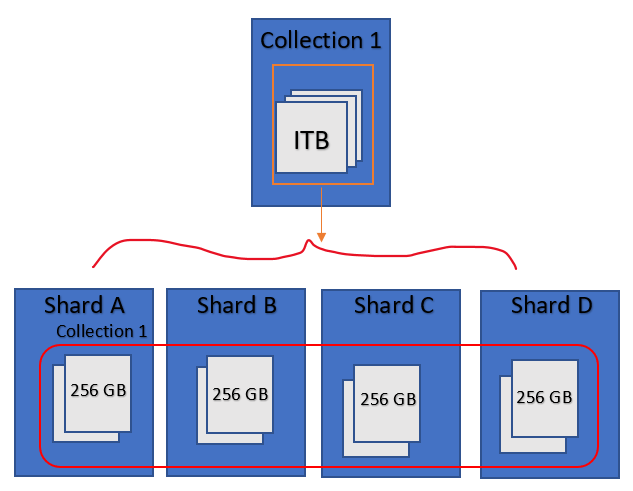
Sharding involves breaking up one's data into two or more smaller chunks, called logical shards. The logical shards are then distributed across separate database nodes, referred to as physical shards, which can hold multiple logical shards.

Sharding is a method of splitting and storing a single logical dataset in multiple databases.
Sharding adds more servers to a database and automatically balances data and load across various servers. These databases are called shards.


Sharding is also referred as horizontal partitioning. The distinction of horizontal vs vertical comes from the traditional tabular view of a database. 


Question 2:

What are the types of database sharding?

Answer:


A database can be split vertically — storing different tables & columns in a separate database, or horizontally — storing rows of a same table in multiple database nodes.


Example of Vertical partitioning:

fetch_user_data(user_id) -> db["USER"].fetch(user_id)
fetch_photo(photo_id) -> db["PHOTO"].fetch(photo_id)

Example of Horizontal partitioning:

fetch_user_data(user_id) -> user_db[user_id % 2].fetch(user_id)


Vertical sharding is implemented at application level – A piece of code routing reads and writes to a designated database.
Natively sharded DB’s are : Cassandra, MongoDB

Non-sharded DB’s are : Sqlite, Memcached etc.


When we need to do sharding?

Answer:

·         When the data set outgrows the storage capacity of a single MongoDB instance.
·         When a single MongoDB instance is unable to manage write operations.


Question 3:

How to implement sharding in MongoDB?

Answer:


When deploying sharding, we need to choose a key from a collection and split the data using the key's value.

Task that the key performs:


  • Determines document distribution among the different shards in a cluster.


Choosing the correct shard key:

To enhance and optimize the performance, functioning and capability of the DB, we need to choose the correct shard key.


Choosing correct shard key depends on two factors:

  •          The schema of the data
  •          The way database applications query and perform write operations.


Using range-based Shard key:

In range-based sharding, MongoDB divides data sets into different ranges based on the values of shard keys. In range-based sharding, documents having "close" shard key values reside in the same chunk and shard.


Data distribution in range-based partitioning can be uneven, which may negate some benefits of sharding.

For example, if a shard key field size increases linearly, such as time, then all requests for a given time range will map to the same chunk and shard. In such cases, a small set of shards may receive most of the requests and system would fail to scale.


Hash-based sharding:

In this , MongoDB first calculates the hash of a field’s value and then creates chunks using those values. In this sharding, collections in a cluster are randomly distributed.

No real schema is enforced:
  •          We can have different fields in every document if we want to.
  •          No single key as in other databases:

o   But we can create indices on any fields we want, or even combinations of fields.
o   If we want to shard, then we must do so on some index.


Question 4:

What is the use of Amazon EC2? What are the steps to deploy on EC2?

Answer:

Amazon EC2 : Amazon Elastic Compute Cloud

It offers ability to run applications on the public cloud.

It eliminates investment for hardware. There is no need to maintain the hardware. We can use EC2  to launch as many virtual servers as we need.

Steps to deploy on EC2:

·         Launch an EC2 instance and SSH into it. Note: This instance needs to be created first on AWS console[console.aws.amazon.com]. And we should also have certificate to connect to EC2 instance.

·         Install Node on  EC2 instance, if our app is in Angular.

·         Copy paste code on EC2 instance and install dependencies.

·         Start server to run.


OR:

  •          Build out Spring boot app in our own computer. Make .jar file.
  •          Upload this .jar on S3
  •          Create EC2 instance.
  •          SSH into it from our computer.
  •          Now, we are in EC2 instance.
  •          We can install JDK now.
  •          And using java - .jar file path, we can run our application.


Question 5:

How will we use Amazon S3?

Answer:

For using S3, we need to first choose S3 from AWS console and then we need to create a bucket in that for storing our files.

After creating the bucket, we need to click on the upload option and select jar file or any file from our computer and upload it to S3.

While uploading file to S3, we need to provide it some access level so that we can download it from S3 to EC2 instance.

So before that we need to make EC2 instance up and running.
And then we need to connect from local to EC2 instance using private key that we have. For connecting to EC2, we need to do SSH login [from terminal] using some certificate and using some SSH command.

Now we need to install java on EC2 [As , it is not there by default]. After that we can download our jar file from S3 to EC2 instance.

Now just run this jar using java -jar <filename> to run the springboot application.


Question 6:

What are the best Code Review Practices?

Answer:


Clean Code
·         Use intention-revealing names
·         Use Solution-Problem domain names
·         Classes should be small
·         Functions should be small
·         Functions should do one thing
·         Don’t repeat yourself(Avoid duplication)
·         Explain yourself in code : Comments
·         Use Exceptions rather than return codes
·         Don’t return Null


Security
·         Make class final if not being used for inheritance
·         Avoid duplication of code
·         Minimize the accessibility of classes and members
·         Document security related information
·         Input into a system should be checked for valid data size and range
·         Release resources (Streams, Connections) in all cases
·         Purge sensitive information from exceptions
·         Don’t log highly sensitive information
·         Avoid dynamic SQL, use prepared statement
·         Limit the accessibility of packages, classes, interfaces, methods and fields
·         Avoid exposing constructors of sensitive classes
·         Avoid serialization of sensitive classes
·         Only use JNI when necessary


Performance
·         Avoid excessive synchronization
·         Keep synchronized sections small
·         Beware the performance of String concatenations
·         Avoid creating unnecessary objects

General
·         Don’t ignore exceptions
·         Return empty arrays or collections , not nulls
·         In public classes, use accessor methods not public fields
·         Avoid finalizers
·         Refer to objects by their interfaces
·         Always override toString()
·         Document thread safety
·         Use marker interfaces to define types

Static Code Analysis

·         Check static code analyzer report for the classes added/modified


Question 7:

What are the types of Http Error codes?

Answer:

There are 5 types of Error codes:

1XX Informational:

100: Continue


2XX Success:

200 : OK
201 : Created
202 : Accepted
204 : No Content


3XX Redirection:


4XX Client Error:

400 : Bad Request
401 : Unauthorized
402 : Payment Required
403 : Forbidden
404 : Not Found


5XX Server Error:

500 : Internal Server Error
501 : Not Implemented
502 : Bad Gateway
503 : Service Unavailable [Website's server is simply not available]


Question 8:

What are the Asymptotic Notations?

Answer:

To calculate running time complexity of an algorithm, we use following asymptotic notations:


Big Oh Notation O:

The notation O(n) is the formal way to express the upper bound of an algorithm's running time.
It measures the worst case time complexity or the longest amount of time an algorithm can possibly take to complete.


For example, for a function f(n)

O(f(n)) = { g(n) : there exists c > 0 and n0 such that f(n) <= c.g(n) for all n > n0. }


Omega Notation:

The Omega notation is the formal way to express the lower bound of an algorithm's running time. It measures the best case time complexity or the best amount of time an algorithm can possibly take to complete.


For example, for a function f(n)


Theta Notation:

The notation theta (n) is the formal way to express both the lower bound and upper bound of an algorithm's running time.It is represented as follows:


That's all for this interview post.
Hope this post helps everybody in their java Technical interviews.

Thanks for reading!!


CAP Theorem and external configuration in microservices

 Hi friends, In this post, I will explain about CAP Theorem and setting external configurations in microservices. Question 1: What is CAP Th...